

In the rapidly evolving landscape of modern medical technology, laser cutting machines have moved from the macroscopic industrial field to the core of microscopic medical device manufacturing. With their unparalleled precision and flexibility, they provide groundbreaking manufacturing solutions for the innovation of high-end medical products such as implantable and interventional devices and surgical instruments.
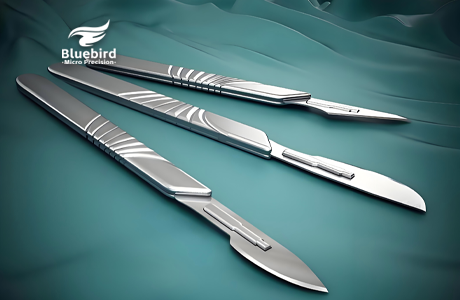
Medical device manufacturing, especially for implants and fine surgical instruments, faces stringent requirements far exceeding those of ordinary industrial products: In terms of materials, it requires handling special materials such as titanium alloys, cobalt-chromium alloys, nickel-titanium shape memory alloys, and bioabsorbable polymers; in terms of precision, it often requires micron-level accuracy to ensure biocompatibility and functionality; and in terms of design, increasingly complex microstructures (such as drug-coating grooves and porous structures that promote tissue growth) pose a significant challenge to traditional processing methods. Any minute burrs, thermal damage, or changes in material stress can directly affect clinical outcomes and patient safety.
Laser cutting technology, particularly the application of ultrashort pulse lasers (such as picosecond and femtosecond lasers), provides a crucial path to overcoming these bottlenecks. Its core advantages include:
Cellular-scale processing precision: Focusing the laser beam to a micron-level spot allows for cutting with a minimal heat-affected zone, achieving near-perfect cut quality without burrs or slag. This is crucial for devices such as vascular stents that require extremely high surface smoothness to prevent thrombosis.
Ability to handle complex microstructures: The digital and flexible processing characteristics of lasers allow for the easy cutting of intricately designed mesh patterns, grooves, or holes on small workpieces. These structures not only ensure the necessary flexibility and support of the device but also provide a physical basis for functions such as drug delivery and endothelialization.
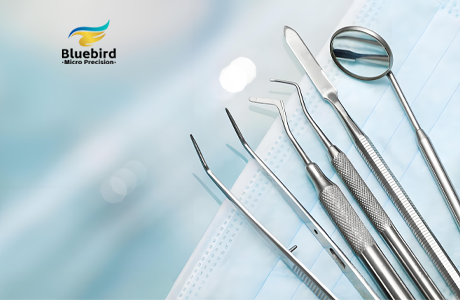
Non-destructive processing of special materials: For heat-sensitive shape memory materials such as nickel-titanium alloys, ultrafast pulse lasers enable "cold processing," maximizing the preservation of their superelasticity and memory effect. For brittle bioceramics or biodegradable polymers, lasers can also achieve precise shaping, avoiding microcracks caused by mechanical stress. From drug-eluting stents that open up life-saving pathways in coronary arteries, to porous fusion devices that stabilize vertebrae in spinal fusion surgery, and the ultra-thin, precision surgical blades and biopsy needles used in neurosurgery, the imprint of laser cutting is deeply embedded in the fabric of modern medicine. It has not only improved the performance and reliability of medical devices but has also enabled the realization of many previously impossible minimally invasive treatment concepts.