

In the medical processing field, accurate, safe, and durable marking is crucial. UV laser marking machines, with their superior performance, are a valuable aid in this field.
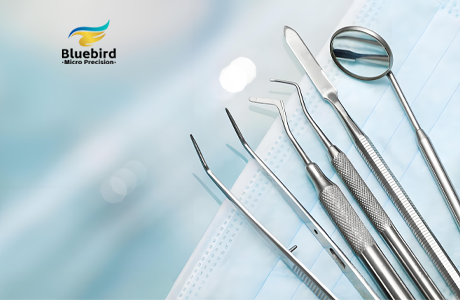
The unique characteristics of medical products dictate stringent marking requirements. Pills are ingested, and catheters, stents, and other products come into contact with the human body. Markings must not contain chemicals that could cause allergies or become a source of contamination. Furthermore, the marked surface must be smooth to prevent damage to human tissue and bacterial growth. Furthermore, medical markings must include key information such as batch and serial numbers for product traceability and to address potential quality issues and counterfeiting.
UV laser marking machines offer significant advantages over traditional ink printing and conventional laser marking. Traditional ink printing relies on chemical solvents, which can easily contaminate the device surface. The markings are also easily removed or altered, and can become blurred after transportation and storage. Conventional laser marking involves thermal processes that alter the material's chemical structure, creating surface irregularities that can create habitats for bacteria. The UV laser emitted by a UV laser marking machine, with photon energies as high as 3.5-4.4 eV, can directly break molecular bonds in materials, achieving "cold etching."
This "cold processing" leaves virtually no heat-affected zone and does not alter the properties of surrounding materials. The short wavelength allows the UV laser to interact precisely with the material, minimizing thermal effects. It also allows for tight focus, enabling high-resolution marking. The mark is formed within the material, making it difficult to alter or damage, and providing no breeding ground for bacteria.
For pharmaceutical packaging marking, such as HDPE bottles, traditional inkjet marking is easily removed by solvents and can also contaminate the ink. A UV laser marking machine utilizes a 355nm diode-pumped solid-state laser and a galvanometer-type galvanometer system to rapidly generate high-contrast QR codes on the curved surfaces of bottles, completing an 8×8mm barcode pattern in under 2 seconds.
In the medical device marking industry, surgical instruments require frequent sterilization. UV laser marking machines offer precise, permanent markings that are wear-resistant, sterilization-resistant, and contamination-free. For medical polymer materials such as silicone rubber catheters, UV laser marking machines can focus on marking the inner surface without affecting the texture of the outer surface in contact with the patient and preventing thermal deformation. For small-sized oral medical products like braces, UV laser marking machines can precisely mark brand, model, and other information. Their cold light source properties protect heat-sensitive materials, resulting in durable, medically standardized markings and the ability to accommodate customization.
For implantable medical devices such as pacemakers and vascular stents, UV laser marking machines can engrave high-resolution UDI codes and invisible security codes, ensuring product traceability and anti-counterfeiting without compromising biocompatibility or functionality.
For medical consumable marking, UV lasers are used to create subsurface nanostructured markings on dialyzer housings, ensuring permanence and biosafety. For flexible materials like gelatin capsules with high water content, the UV laser marking machine's 3D dynamic focusing system enables non-destructive marking, reducing scrap rates.
As medical technology advances, UV laser marking machines will continue to provide high-quality solutions for medical product marking, helping the medical industry move toward higher-quality development and contributing to patient health.